Project category
Development, Growth & Economy
Project state
Active
Image
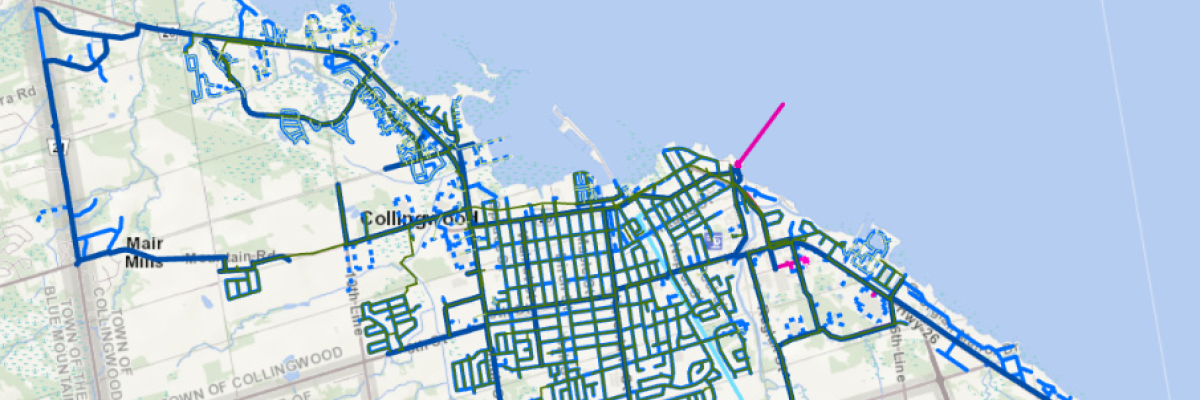
The Town of Collingwood is preparing the 2026 Water and Wastewater Master Servicing Plan to guide long-term planning and investment in the Town’s drinking water and wastewater systems through 2051. This study will assess existing infrastructure, forecast future growth and demand, and identify sustainable, cost-effective servicing strategies to support a healthy, resilient, and growing community. Completed in accordance with the Municipal Class Environmental Assessment process, the Master Servicing Plan will provide a clear, data-driven framework to protect public health, support environmental stewardship, and enable the timely delivery of critical infrastructure projects.
- Planning for Collingwood’s Future Growth
The 2026 Water and Wastewater Master Servicing Plan will provide a long-term roadmap to ensure Collingwood’s water and wastewater systems can safely and reliably support growth through 2051. - Protecting Public Health and the Environment
The plan will prioritize public health, environmental protection, and regulatory compliance by identifying infrastructure solutions that safeguard drinking water, reduce wastewater impacts, and protect Georgian Bay. - Data Driven, Defensible Decision Making
Using updated water and wastewater models, growth projections, and technical analysis, the Plan will provide a clear, evidence-based foundation for future capital investments and servicing decisions. - Integrated and Coordinated Infrastructure Planning
Water and wastewater planning is coordinated with land use planning, transportation, stormwater management, asset management, and concurrent environmental assessments to maximize efficiency and reduce disruption. - Supporting Sustainable and Cost-Effective Infrastructure
The Plan will evaluate options based on technical performance, environmental sustainability, social impacts, and long-term financial affordability to ensure responsible use of public resources. - Preparing for Climate Change and Resilience
Climate impacts, seasonal demand, and future uncertainty are built into planning assumptions to improve system resilience and adaptability over the long term. - Growth that Aligns with Community Priorities
The Plan will support compact development, intensification, and a full range of housing options, while ensuring infrastructure keeps pace with residential, employment, and tourism-related growth. - Enabling Faster Project Delivery
By completing the Master Plan in accordance with the Municipal Class Environmental Assessment process, many future infrastructure projects will be able to advance directly to detailed design and construction. - Collaboration and Public Engagement
The process includes meaningful engagement with residents, Indigenous communities, agencies, and stakeholders to ensure transparency, shared understanding, and informed decision-making. - A Clear Implementation Roadmap
The Plan will identify prioritized projects, timing, trigger conditions, and cost estimates—providing Council and staff with a practical, actionable framework for implementation.